You bring home a bag with a roast date three days old, open it, and the kitchen smells like the roastery. The first cup is bright and sweet. Two weeks later the same beans taste like cardboard with a hint of paper, and you wonder what went wrong.
Probably nothing dramatic. Freshness is a slope, not a switch. Beans begin shedding aromatics the moment they cool, and oxygen, heat, light and moisture each push the slide along a little faster. Most of the damage happens on your counter, in the last metre between the bag and the grinder. The fix is not expensive: a decent container, a sensible shelf, and one short check each week.
Those one-way valves on the bag are not decoration. Freshly roasted beans release carbon dioxide for several days, and the valve lets that gas escape while keeping outside oxygen from getting in. It is why a good bag puffs up on the shelf. Emptying the beans into a pretty jar the hour you get home usually shortens their useful life.
A few habits keep the bag doing its job:
Move them when the bag will not reseal properly, when it is far too large for the amount left, or when you are portioning for the freezer. In each case, transfer to an airtight container and write the roast date on it with a marker. That small label matters more than most equipment upgrades.
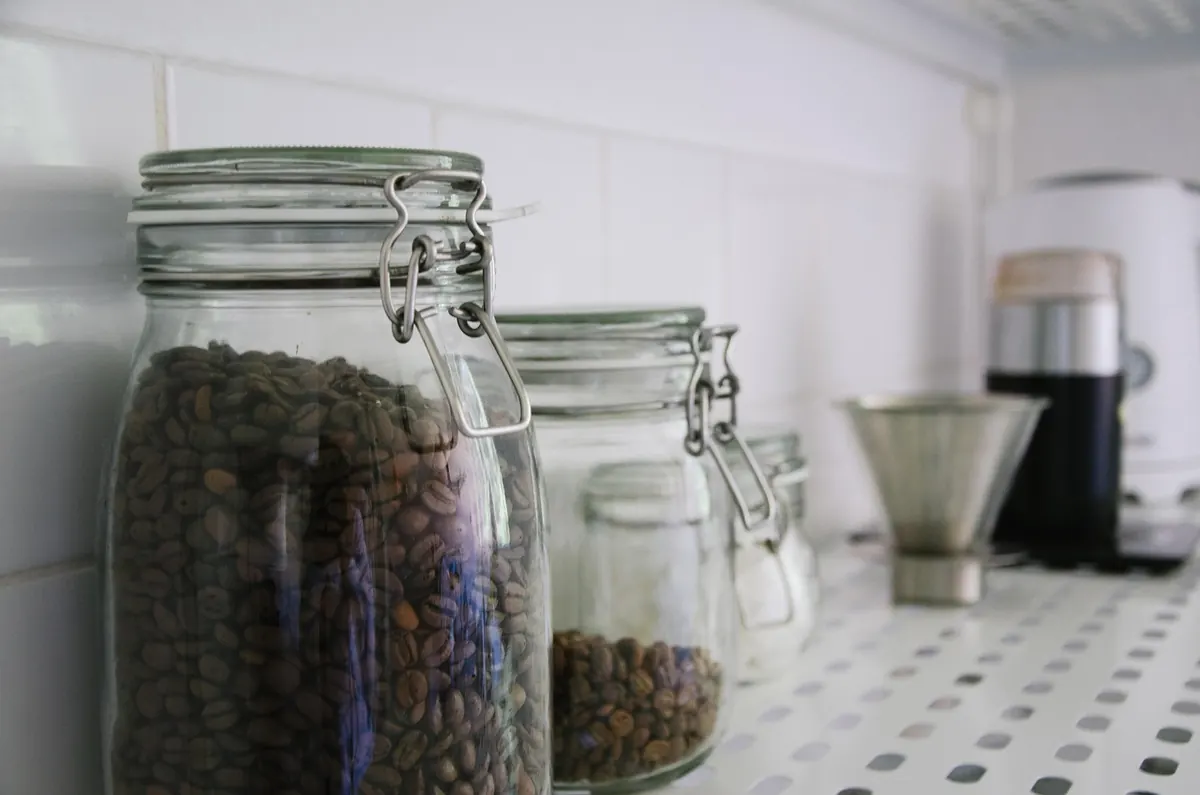
Three things matter: it should be airtight, it should block light, and it should be the right size. That last one is the most ignored. Headspace is oxygen, so a half-empty two-litre jar is worse for your beans than a full 500 ml one. If you keep several coffees open, use several small containers rather than one big one.
Glass jars with a silicone gasket and clamp, ceramic canisters with a rubber seal, and stainless steel tubs all work well. Avoid clear jars on a sunlit counter, and avoid thin plastic that picks up and holds the oils. If you love seeing the beans, keep the jar in a cupboard rather than on the windowsill.
Clean the container properly between refills. Old oils turn rancid and will taint a fresh batch within days. Wash with warm water, dry it completely, and let it air out overnight. A damp container is worse than no container at all.
The best shelf in the house is a cool, dark cupboard away from the oven, the kettle, the dishwasher and the toaster. Above the fridge feels convenient and is quietly warm. The windowsill is light plus heat, a double hit.
The fridge is the classic mistake. Beans come out cold, room air condenses on them, and you are effectively adding water. Fridges also carry strong smells that porous beans absorb happily. Skip it.
The freezer is a different story, but only for longer storage. Portion beans into week-sized airtight bags, squeeze out the air, freeze them, and take out one portion at a time. Let that portion come to room temperature before grinding, and do not refreeze it afterwards.
Freeze once, thaw once, grind once.
Whole beans keep far longer than ground coffee because the aromatics stay locked inside. Grind immediately before brewing, even if it costs you an extra minute in the morning. The smell you enjoy while grinding is the coffee leaving the bean, which is exactly why you want it happening over the brewer and not an hour earlier.
If you buy pre-ground, the same rules apply with more urgency: airtight, dark, cool, small quantities, and a shorter window before the cup goes flat. Adjust your grind as beans age, too. Older beans release gas more slowly and often need a touch finer to taste balanced.
Run this once against a new bag. It takes a couple of minutes a day and tells you more than any label.
Stale coffee rarely tastes rotten. It tastes tired: flat, papery, faintly dusty, with a finish that stops short. Milk and sugar hide it well, which is why the decline often goes unnoticed until someone else makes you a cup. In a pour-over or French press, a lack of bloom when the hot water hits the grounds is a useful early clue. If a finer grind and a slightly higher dose do not revive the cup, the beans are the problem, not the technique.
Pick one evening a week. Tip the beans out onto a tray, wipe the container dry, check the gasket for cracks, refill, and note the date. Keep a short line in a notebook or phone about how that bag tasted on day one and day seven. After a month you will know your own pace, and buying coffee becomes a simple calculation rather than a guess.
Freshness will always slip. Good storage just keeps you near the top of the slope for longer, and gives you a fair chance at a genuinely good cup on a Tuesday morning when you need one.
Photo: StockSnap / Pixabay