Two mugs, one bag of beans, two very different cups. That is the simplest way to describe the gap between a pour-over and a French press, and it is the reason so many people keep both on the counter. The French press gives you weight and texture. The pour-over gives you definition and light. Neither is correct, and neither is worth arguing about at seven in the morning.
What is worth doing is figuring out which one suits the way you actually wake up: how much attention you have to spare, how many cups you need, and whether you would rather taste the coffee's edges or feel its body. Here is what each method asks of you, and what it gives back.
A French press is an immersion brew. Ground coffee sits in hot water for several minutes, and when you press the plunger you push the grounds to the bottom of the carafe. The metal mesh filter is porous, so fine particles and coffee oils travel into your cup. The result is a heavier mouthfeel, a rounder texture, and flavours that read as cocoa, toasted nuts, dark sugar, baked fruit. Some people call it "muddy." Others call it breakfast.
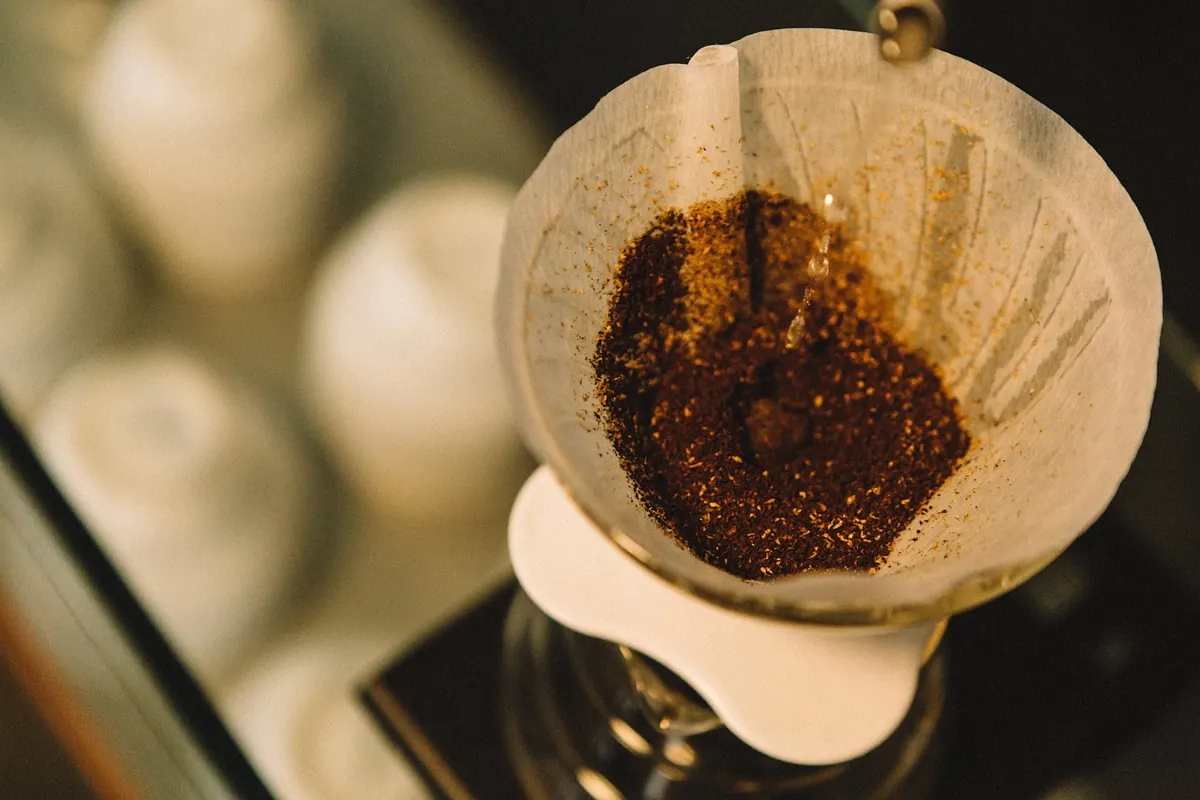
A pour-over is a percolation brew filtered through paper. Water passes through the coffee bed, and the paper catches most of the oils and nearly all the sediment. You get a thinner liquid that reads more like tea in texture, but with far more separation: a washed Ethiopian coffee will show its lemon and jasmine instead of burying them under a blanket of body. Brewers like a V60, Kalita, or Chemex all follow this logic, with slightly different flow rates and shapes.
The practical takeaway: choose the French press when you want texture and a forgiving, comforting cup. Choose the pour-over when you want to taste a coffee's details, especially with light roasts.
If you remember one technical point from this comparison, make it this one. The grind has to match the method, and getting it wrong is the most common reason people give up on either brewer.
A burr grinder helps enormously here, because consistency matters more than any single setting. If you are working with a blade grinder, pulse in short bursts and shake the grounds between pulses to even things out. And change one variable at a time. Grind, then taste, then adjust.
The French press is the more patient of the two. Add coffee, add water, stir once, put the lid on, and set a timer for about four minutes. You can walk away. You can butter toast, answer a message, or stare out the window. When the timer goes, press slowly and pour. It is also fairly forgiving: a minute over will make the cup stronger and a little rougher, but it rarely ruins it.
Pour-over asks for your hands. A typical single cup takes two and a half to four minutes total, and much of that time you are standing there. You rinse the filter, add the grounds, pour a small bloom of water and wait thirty to forty-five seconds while the bed settles, then add the rest in slow spirals or gentle pulses. You are managing water level and flow, not just waiting. For some people that standing-and-pouring is the most pleasant part of the day. For others it is exactly the friction they do not want before coffee.
If you have four minutes of attention, the pour-over rewards it. If you have thirty seconds, the French press does not punish you for it.
Cleanup is where real routines are made or broken, so be honest with yourself about it.
With a French press, you have wet grounds and a mesh filter. Do not rinse grounds down the sink; they accumulate in the trap. Knock them into the bin or a compost container instead, then rinse the carafe and the plunger. Once a week or so, unscrew the filter assembly and wash the individual plates, because old oils collect in there and turn stale. That is the step most people skip and the reason a French press sometimes tastes off after a few months.
With a pour-over, you lift the paper filter with the grounds inside and drop the whole thing in the bin or compost. Rinse the dripper, and you are done. No mesh, no disassembly, no sludge. The trade-off is that you are buying filters regularly, and a filter that collapses or a brewer that clogs can turn a calm morning into a small engineering project.
A French press is a volume brewer. A one-litre carafe makes three or four generous mugs in one go, which is why it suits couples, small households, and anyone who drinks two cups before leaving the house. A pour-over is naturally a single-serving brewer, though a Chemex can handle a larger batch if you are willing to manage a longer pour.
Counter space is close to even. A press takes up a carafe's footprint; a dripper needs a cone and something to sit on, usually a scale and a kettle with a spout you can control. If you already own a gooseneck kettle, pour-over costs you very little to try. If you don't, a French press plus a decent grinder is the cheaper path into better coffee, and it is a fine place to stay.
Match the method to the situation, not to an abstract idea of the "best" brew.
Buy one bag of coffee, split it in half, and brew it both ways on a morning when you are not rushing. Use the same water and roughly the same ratio, about sixty grams of coffee per litre of water, and keep the grind appropriate to each method rather than identical.
Whichever cup you finish first is the one to keep on the counter for weekday mornings, and the other can be your weekend brew. Most people who end up loving coffee seriously keep both, and choose by mood rather than by rule. Start with the one you will actually use at 6:45 a.m., then let the other wait until you have time to enjoy the pouring.
Photo: StockSnap / Pixabay